How to Mix and Match Frames Like a Pro
Mixing and matching frames is one of those deceptively tricky design skills. When done well, it looks curated, elevated, and richly layered — the visual equivalent of a well-traveled home. When done poorly, it can feel chaotic or like a wall of thrift-store leftovers.
Designers don’t avoid mixed frames; they just know how to build structure beneath the variety.
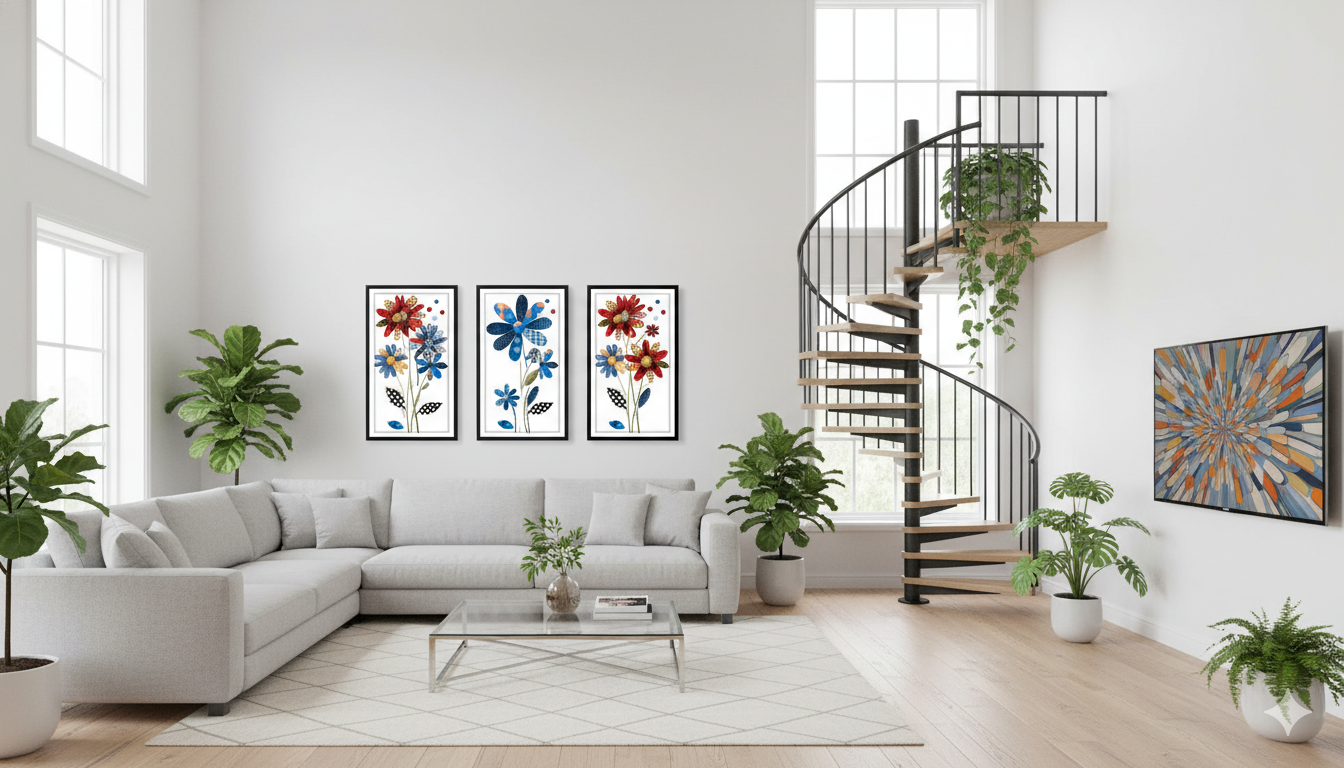
Start with a unifying element
The biggest misconception about mixing frames is that “anything goes.” Designers almost always establish one unifying detail:
- All black frames
- All natural wood tones
- All white mats
- All narrow profiles
One single thread is enough to make even wildly different styles feel intentional. Many curated wall sets from Savage Art Prints follow this exact principle.
Think about “visual weight,” not just color
A thin black metal frame feels light and modern.
A thick, glossy black frame feels bold and heavy.
Natural oak feels warm and relaxed.
Brass feels glamorous.
Aim for a 70/30 ratio: 70% unified frames + 30% accent frames that add personality. Or use a light-medium-heavy distribution for perfect balance.
Matting is your secret weapon
Consistent white or cream mats instantly elevate any mix. They create breathing room and give a museum-like polish — even when frames are completely different woods, metals, or thicknesses.
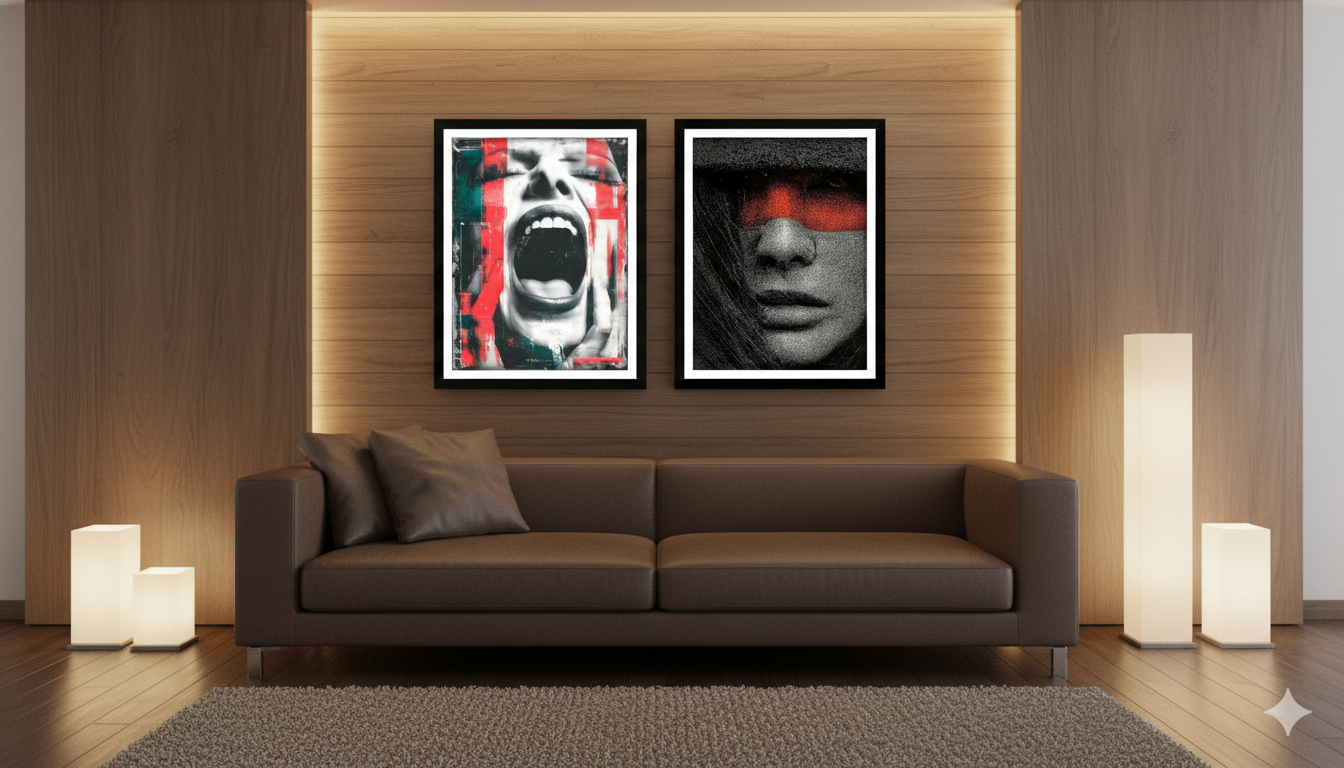
Build your layout on the floor first
Never hang as you go. Lay everything out on the floor, treat the group as one large rectangle, and photograph it in black-and-white to check balance objectively.
Use consistent spacing (2–3 inches is ideal)
Tight, even spacing is the #1 thing that separates pro gallery walls from amateur ones. Use painter’s tape and a level — uneven gaps kill cohesion.
Anchor your layout with a dominant piece
Every great gallery wall needs a “lead” piece — slightly larger, bolder, or more colorful. Place it slightly off-center and let smaller pieces orbit around it.

When to go minimal vs. maximal
Busy room → Keep frames minimal (one dominant material).
Neutral/modern room → You can mix brass with walnut, black metal with light oak, thin with thick.
Summary: Your pro mixing checklist
- Choose one unifying element
- Use mats as the great equalizer
- 70/30 unified-to-accent ratio
- 2–3 inch consistent spacing
- Anchor with one dominant piece
- Build the layout on the floor first
Follow these rules and your mixed-frame wall will look effortlessly curated — exactly like the high-end interiors you see in magazines.